CodeSandbox
CodeSandbox is a cloud-based online development environment that lets developers instantly build, prototype, collaborate on, and deploy web applications directly from the browser without needing to configure a local setup.
About
I began as a creative strategist at CodeSandbox in December 2020. They wanted to branch out into podcasting as a way to reach a tech savvy audience, while also standing out from their competitors. We chose to create a podcast over doing videos — which were hard to produce then due to COVID restrictions — and felt that a well-produced podcast could show a more polished brand identity. Podcasts are also a flexible format; you can transcribe it and have SEO-keyword rich content, not to mention take clips and quotes from the audio to create social posts.
The goal of the podcast was specifically for brand building, with more developer-focused content (like livestreams) existing alongside it. I wanted to focus on metrics like NPS and social mentions, as well as more intangible things like sentiment, affinity, and mindshare. We decided on doing a fixed-length season to test the format without the expectation of a long-term commitment. If the shows were successful in increasing the awareness of CodeSandbox in our market, we would continue future seasons and use the shows to market CodeSandbox features and other campaigns.
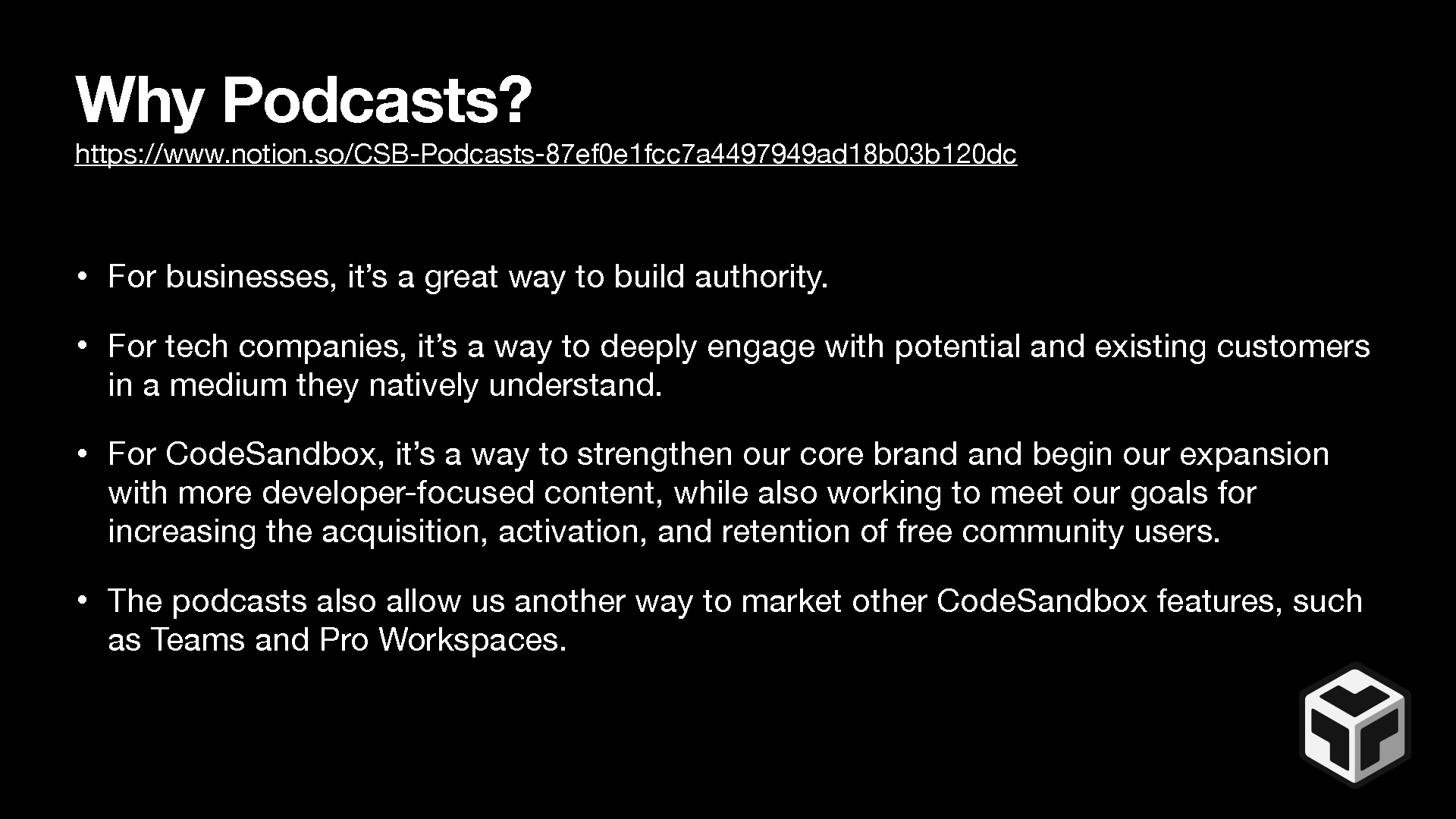
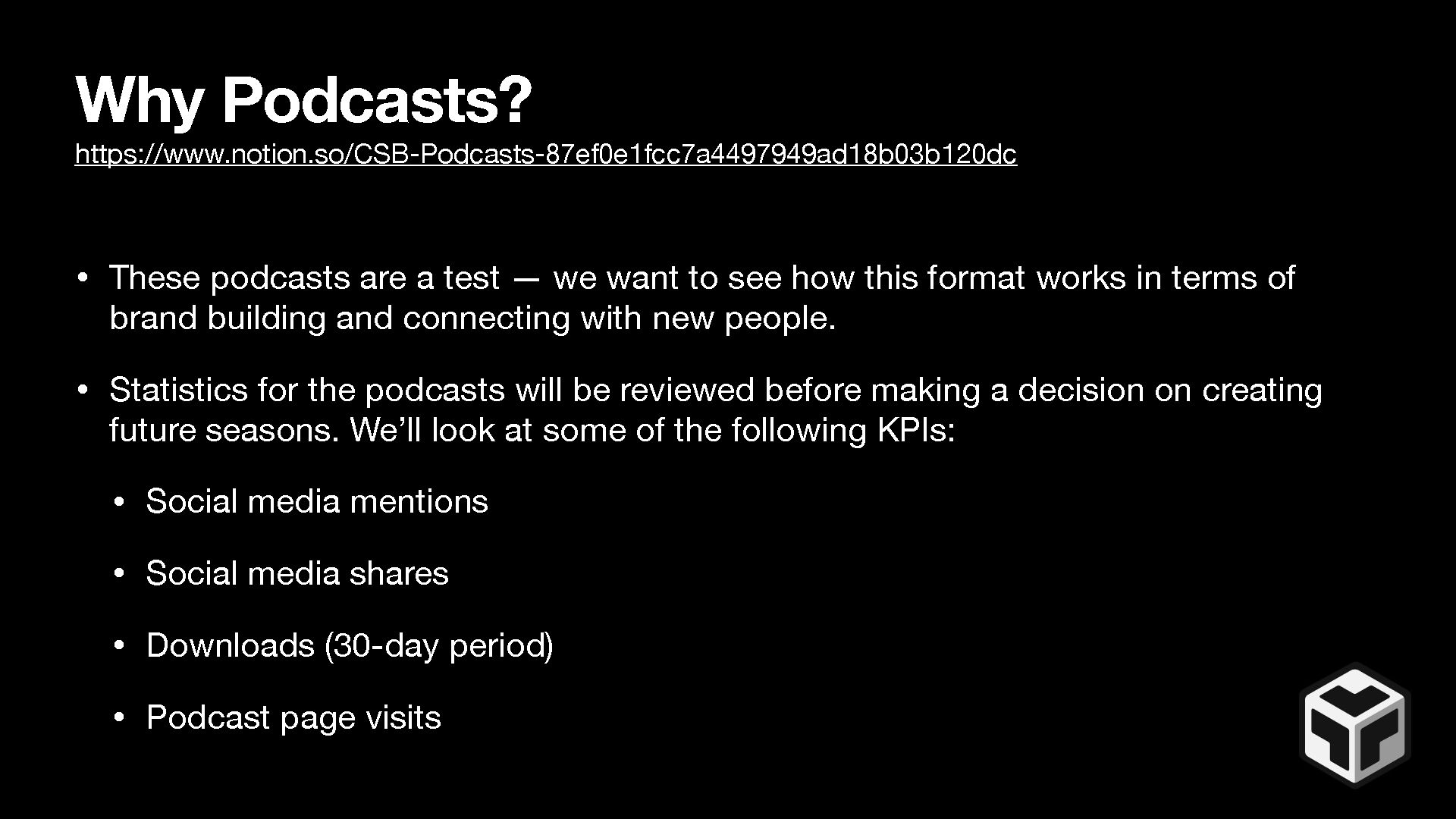
After meeting with our head of growth, as well as the co-founders of the company, the decision was made to create two podcasts and release them together in the next three months as part of the beginnings of a media network.
The Work
The first podcast I created would be about connecting with software developers who were not familiar with the brand, but could be convinced to use CodeSandbox if they saw how the tool inspired others.
I came up with a concept and pitched it to our head of growth and our co-founders. The internal codename for this show was “The MVP.”
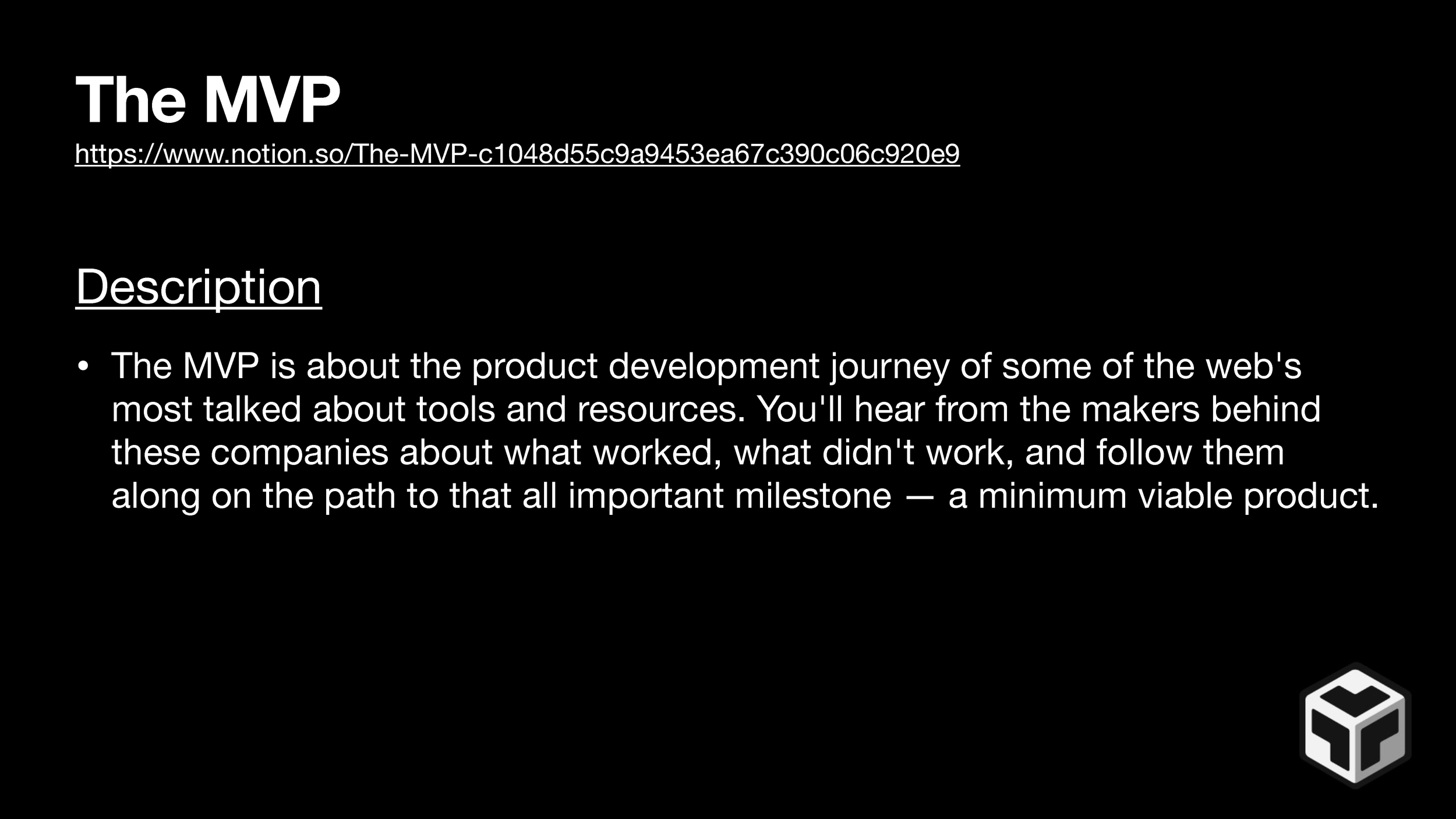
A description based off the internal codename.
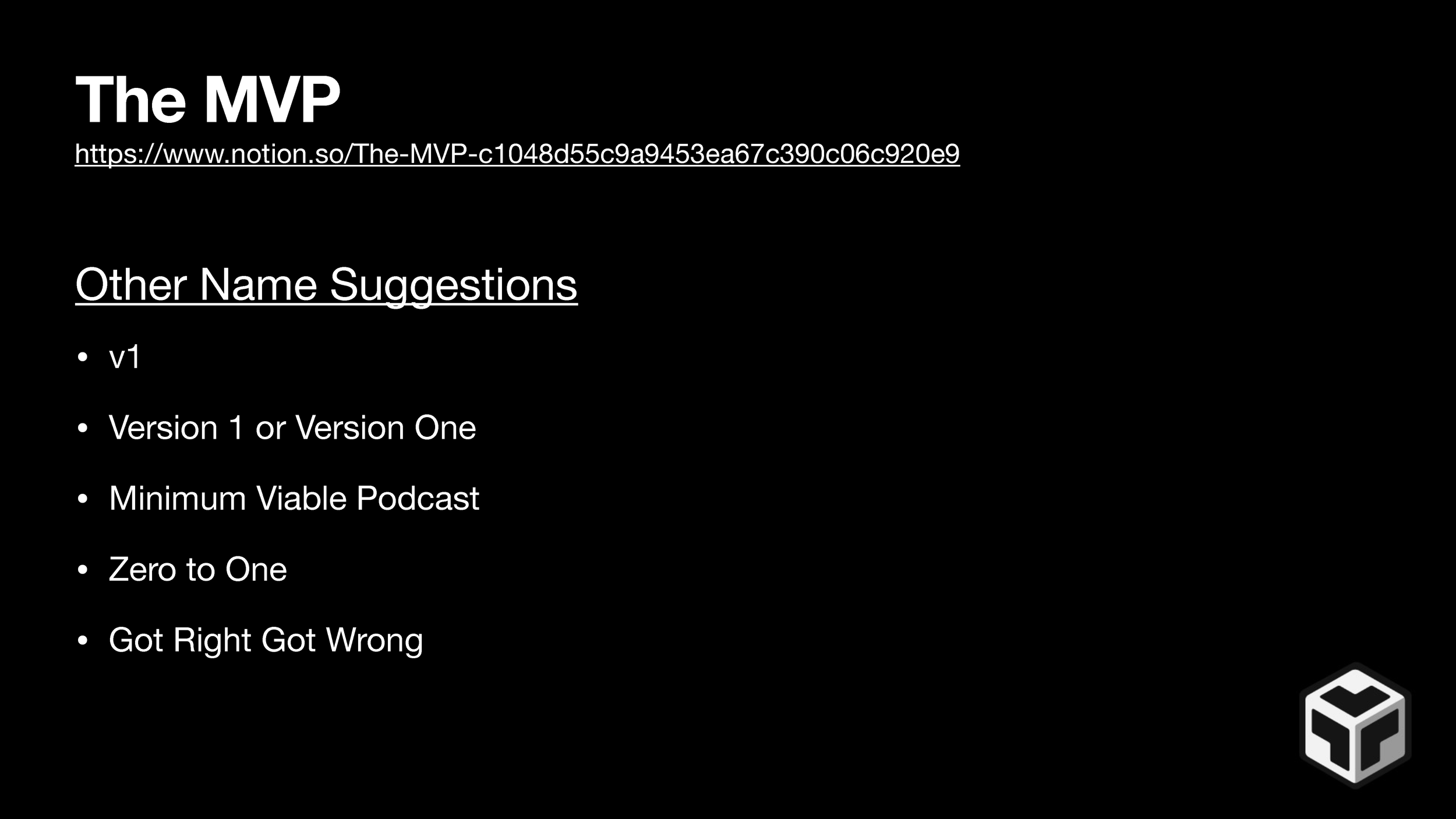
Some other name suggestions for the podcast.
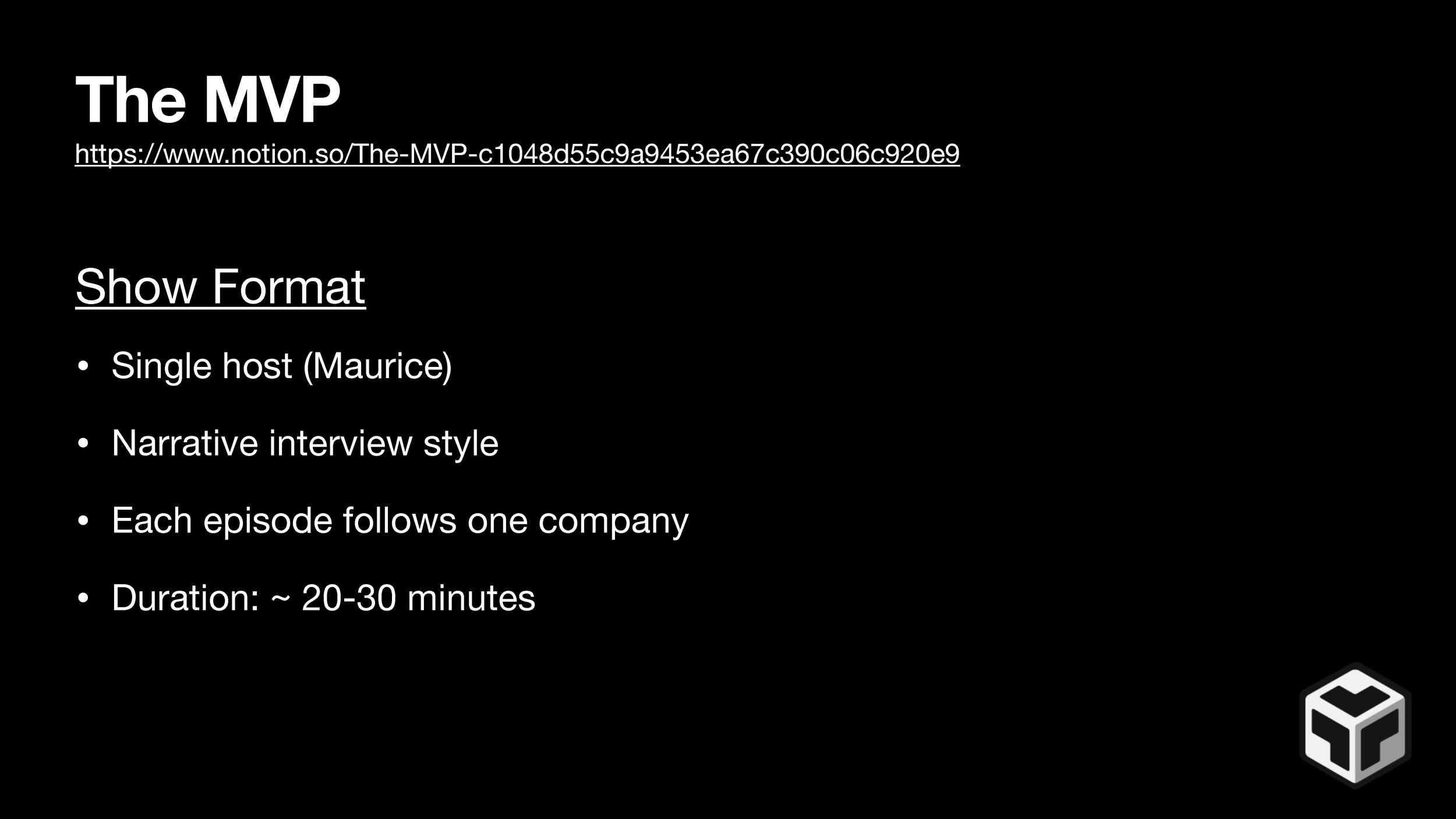
Specifications on show format.
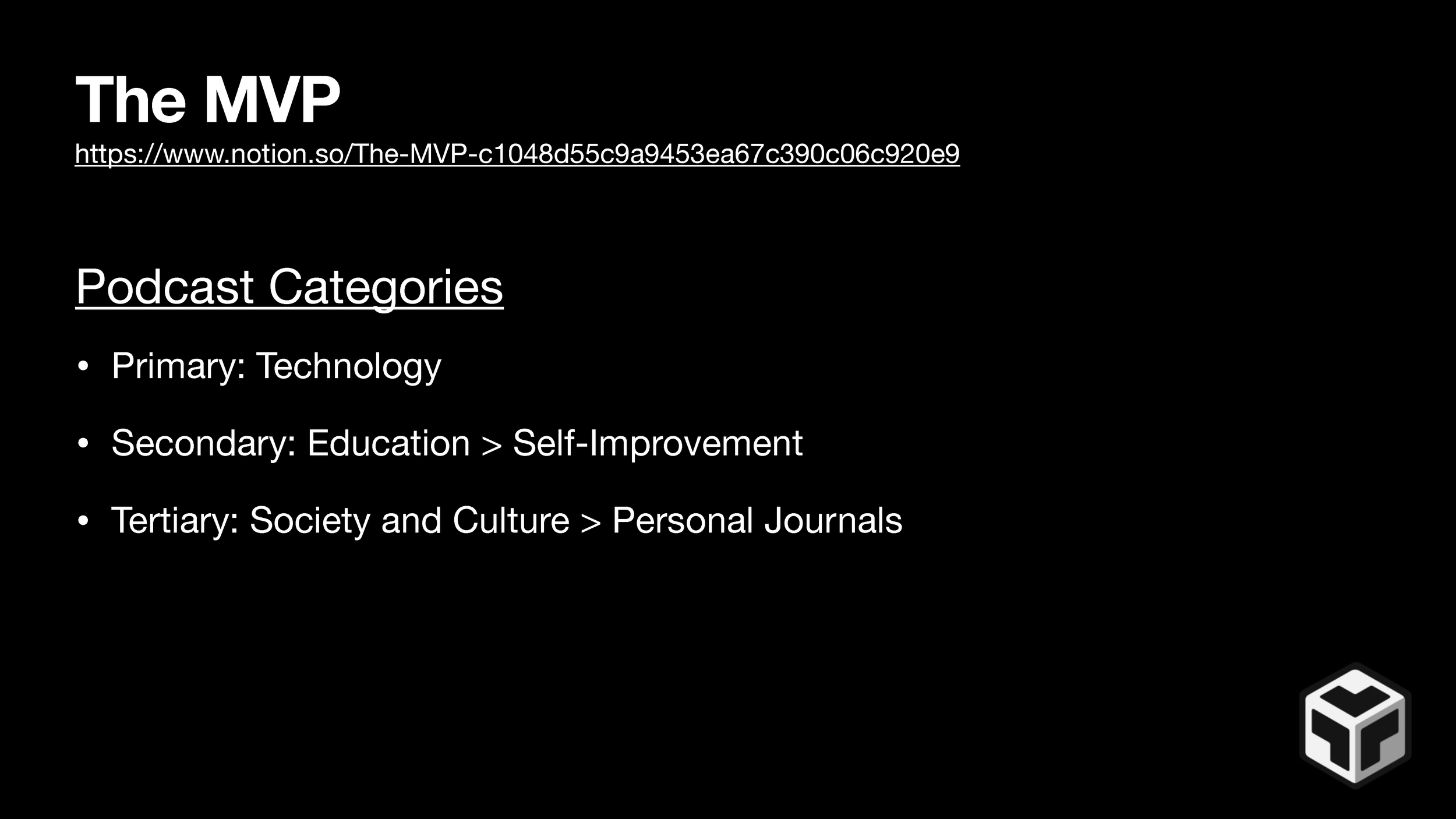
Mapping the podcasts to Apple Podcasts categories.
After some internal meetings, I changed the name of the podcast to Version One. Here is the updated description:
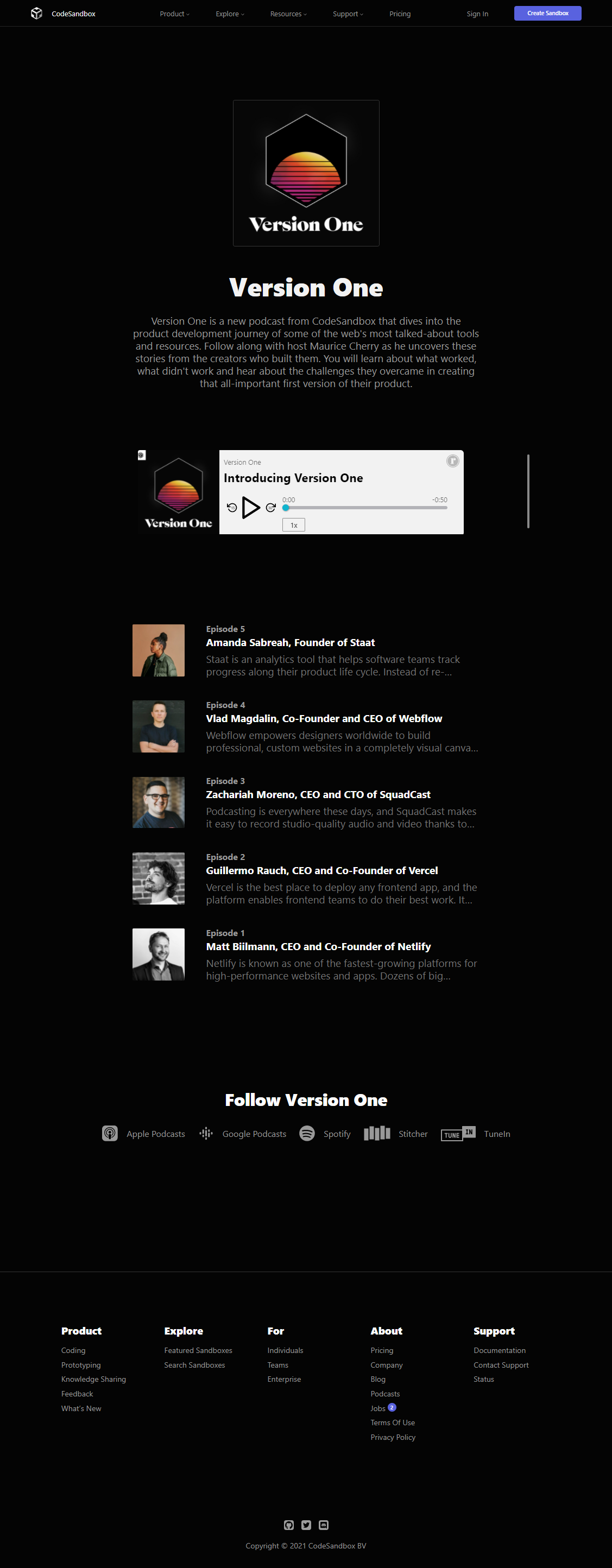
Version One is a new podcast from CodeSandbox that dives into the product development journey of some of the web's most talked-about tools and resources. Follow along with host Maurice Cherry as he uncovers these stories from the creators who built them. You will learn about what worked, what didn't work and hear about the challenges they overcame in creating that all-important first version of their product.
Now that I had the concept down, it was on to visuals and sound design. The visuals I had in mind included 1980s movie posters from films such as The Karate Kid, including some gradients, laser grids, and other 80’s imagery. Since the podcast would be linked with our second show, I wanted to keep a consistent design element on the cover. This ended up being the hexagonal outline of the CodeSandbox logo.
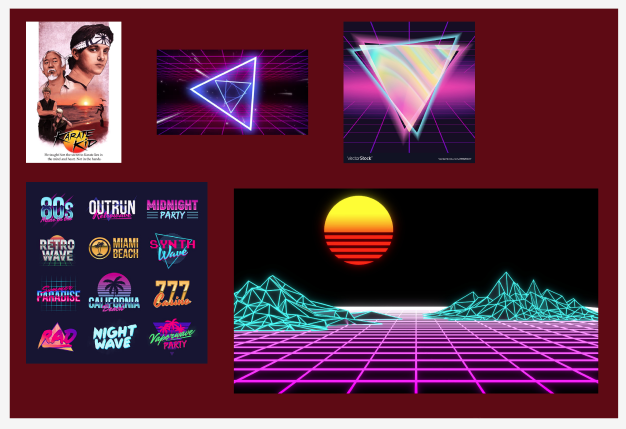
A screenshot of the mood board I had for the cover art; this was done in Figma.
This was the final cover design.
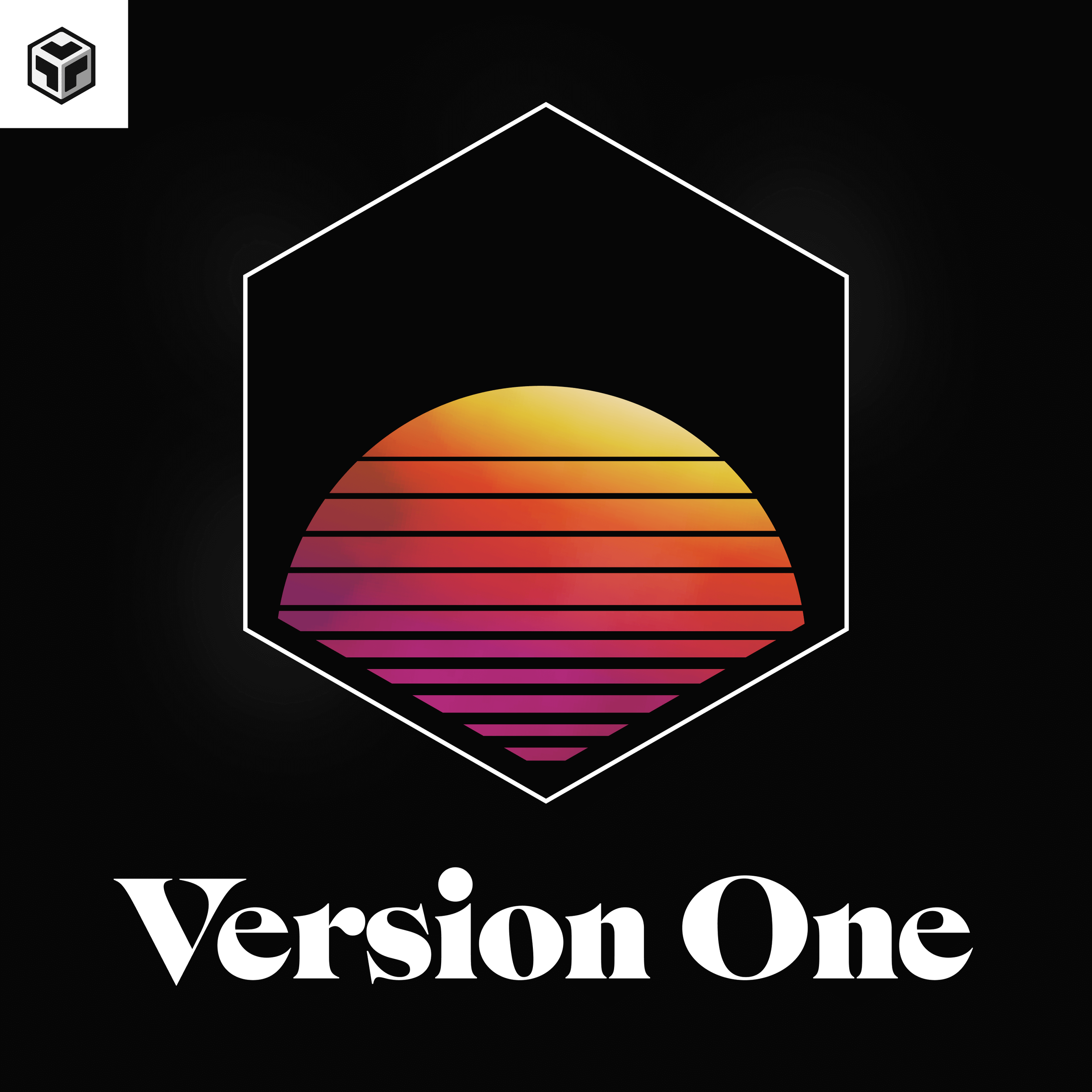
Once the cover was done, the sound design came naturally after that. I purchased a subscription to Epidemic Sound and immediately found an 80s track with a glam rock sound featuring rocking drums and some dreamy synths that encompassed the feelings of hope, aspiration, determination, and grit that I wanted the show to embody.
This is the song I chose.
With the basics of the podcast down, we moved into production with our audio engineering partner Resonate Recordings, and recorded, edited, and published six episodes. These episodes ran from April - June 2021 for one season.
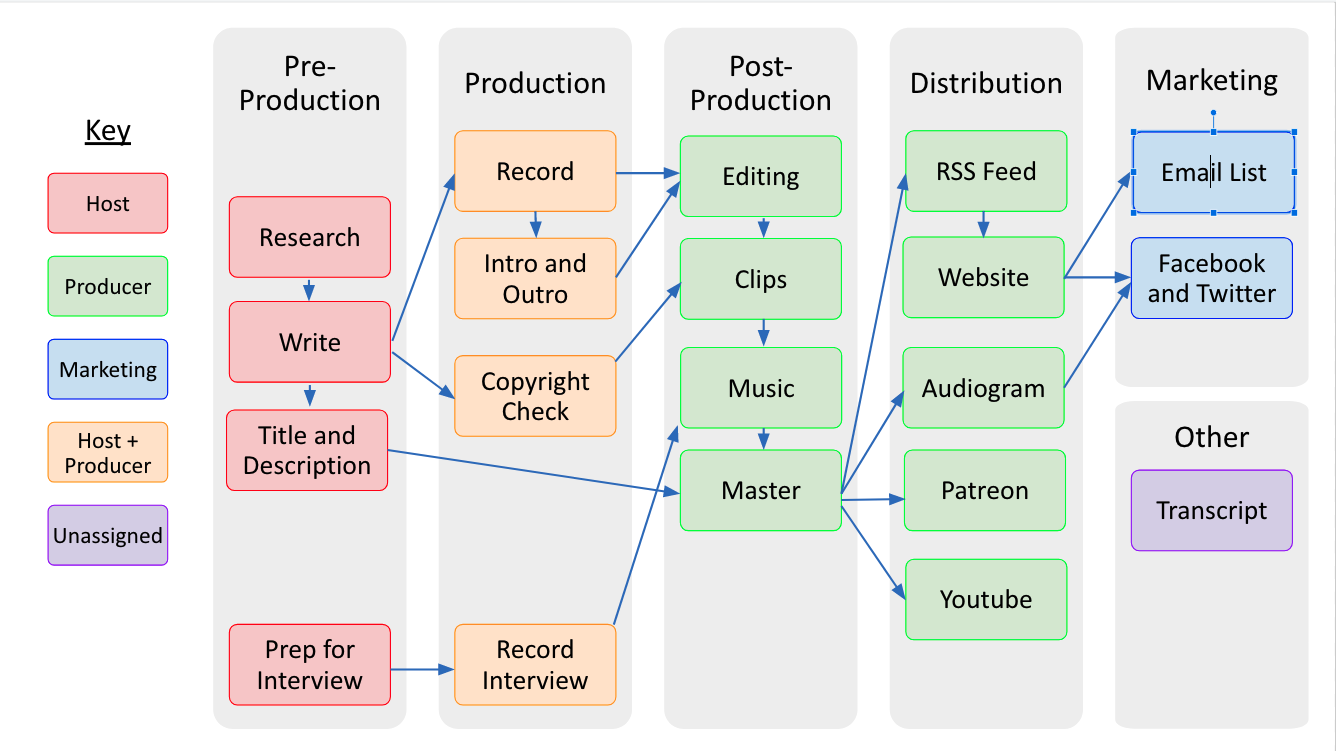
Here is the workflow we followed for both podcasts; I served as producer on both shows, and hosted Version One.
This is the trailer I recorded and produced for Version One.
Here is a snippet from episode 3, where I interviewed Zachariah Moreno of SquadCast.
The second podcast was a branded show where we interviewed creators in the CodeSandbox community and told the stories behind these creators on the platform. The point here was to connect to the community and showcase key users, while exploring the more human side rather than the purely technical.
Based on this, I came up with a concept and pitched it to our head of growth and our co-founders. The internal codename for this show was “The Commit.”
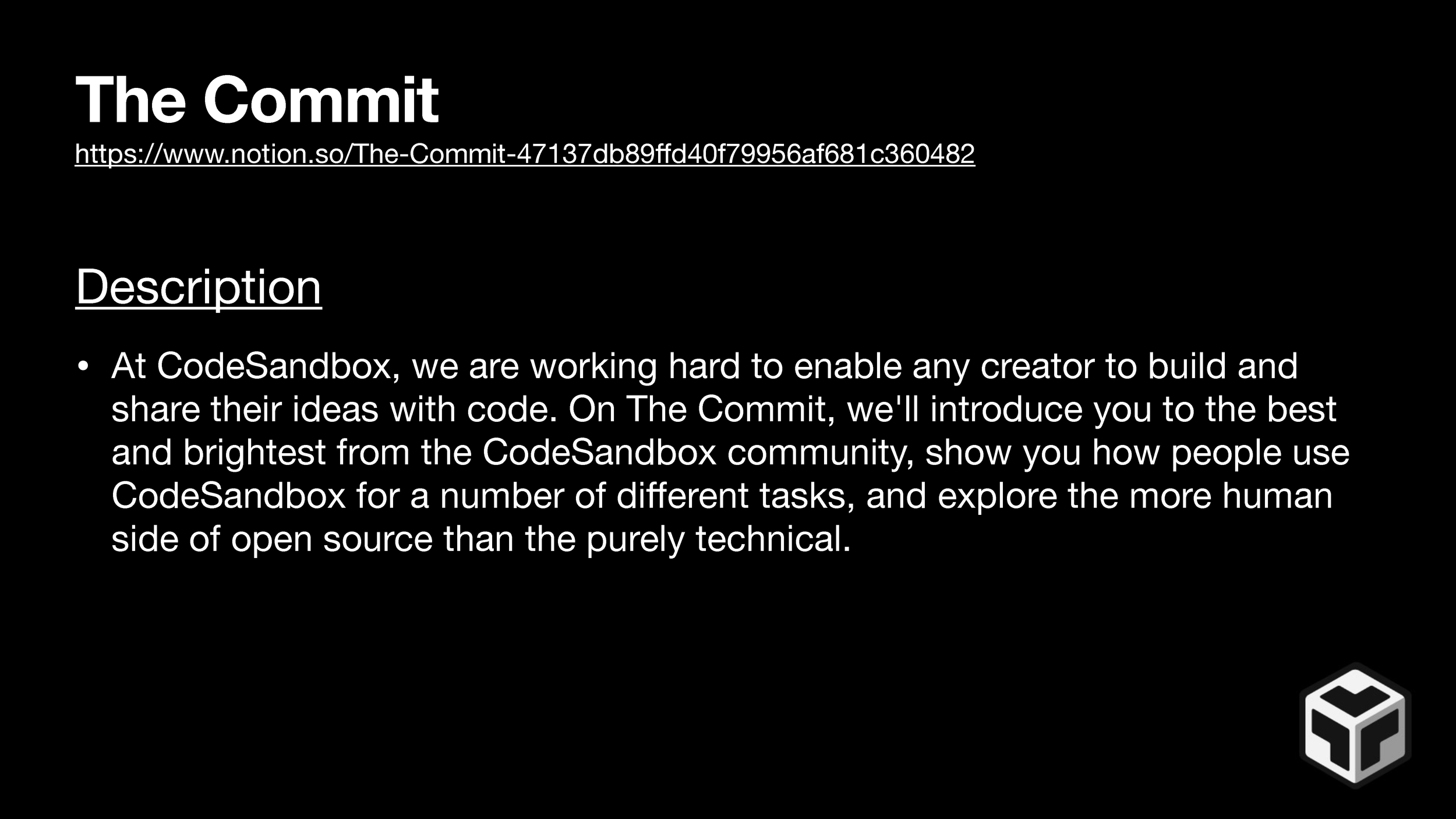
A draft of the description using another name for the podcast, The CodeSandbox Podcast, which I ended up using as the final name.
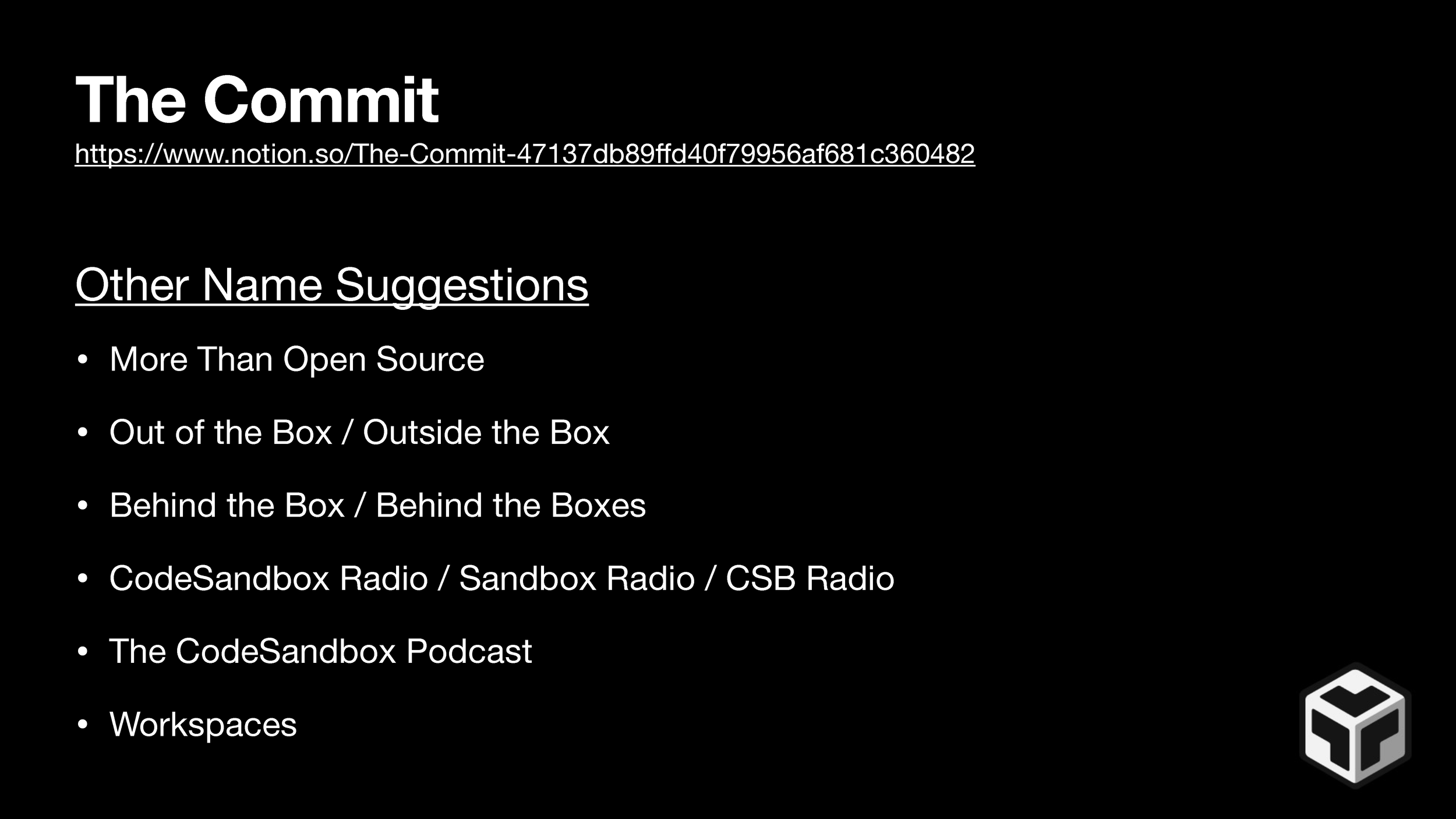
Some more potential names for the podcast.
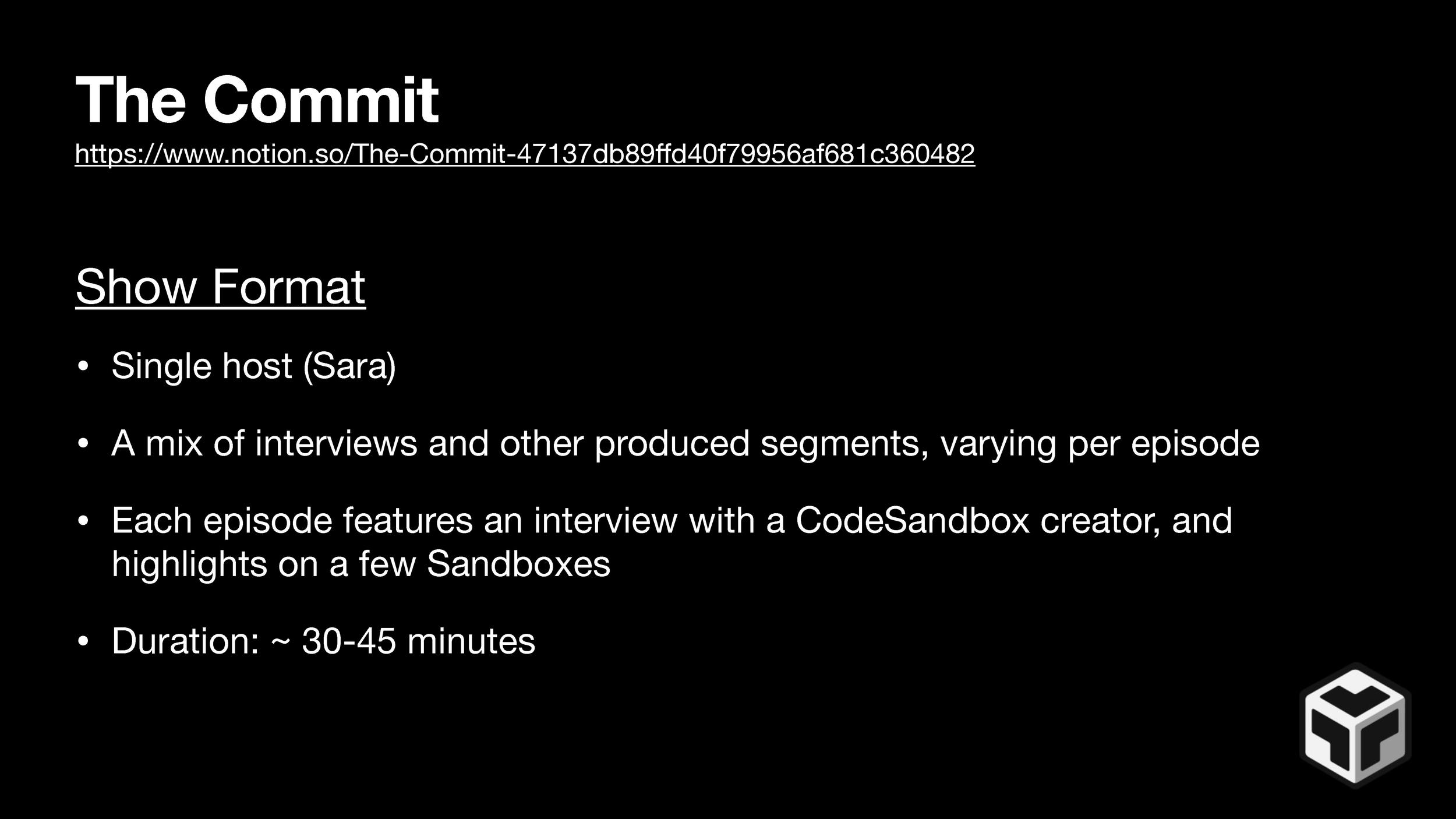
A description of the show format, including the host (a former CodeSandbox employee).
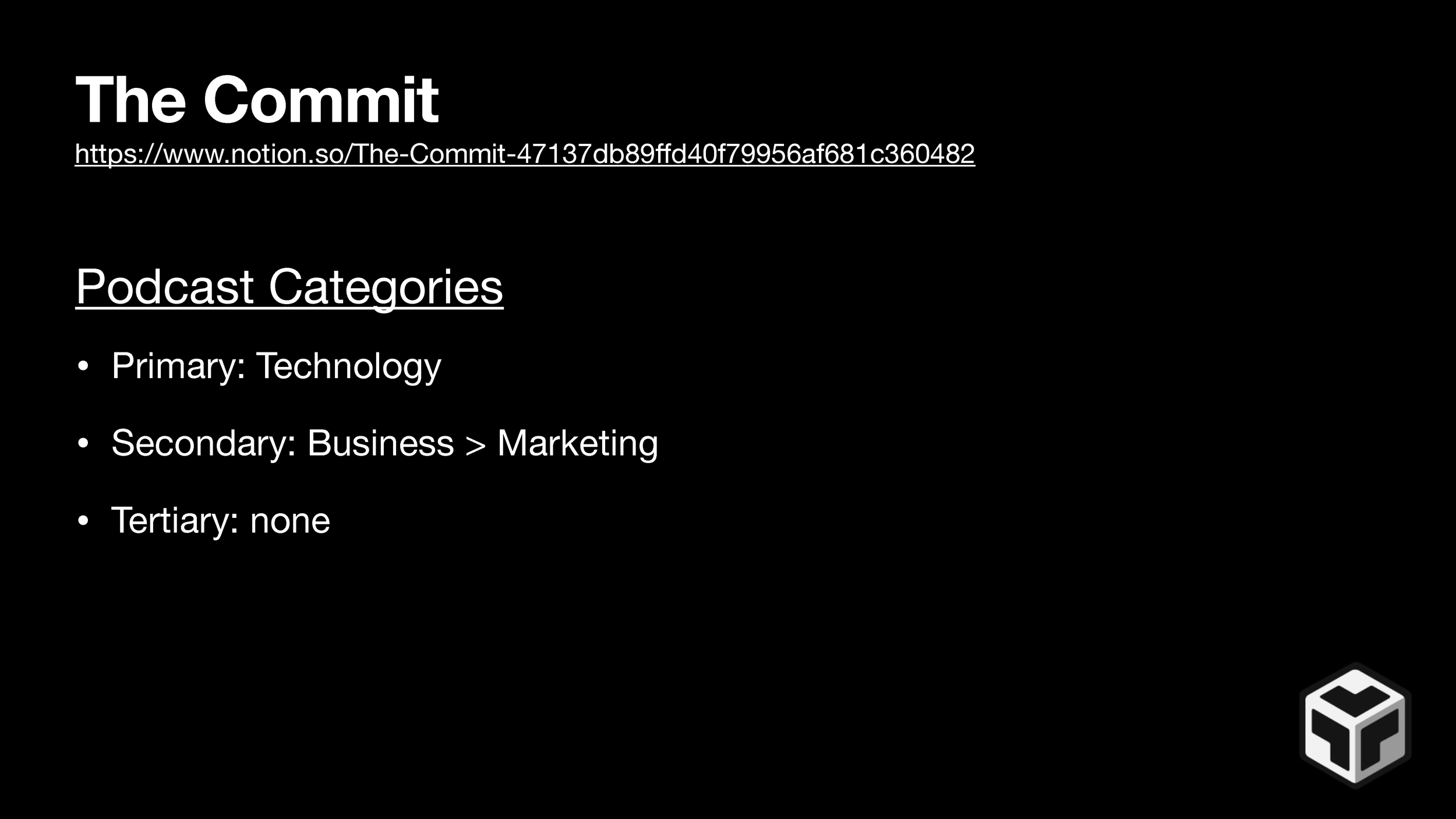
Mapping the podcasts to Apple Podcasts categories.
After some internal meetings, we changed the name of the podcast to The CodeSandbox Podcast. Here is the updated description:
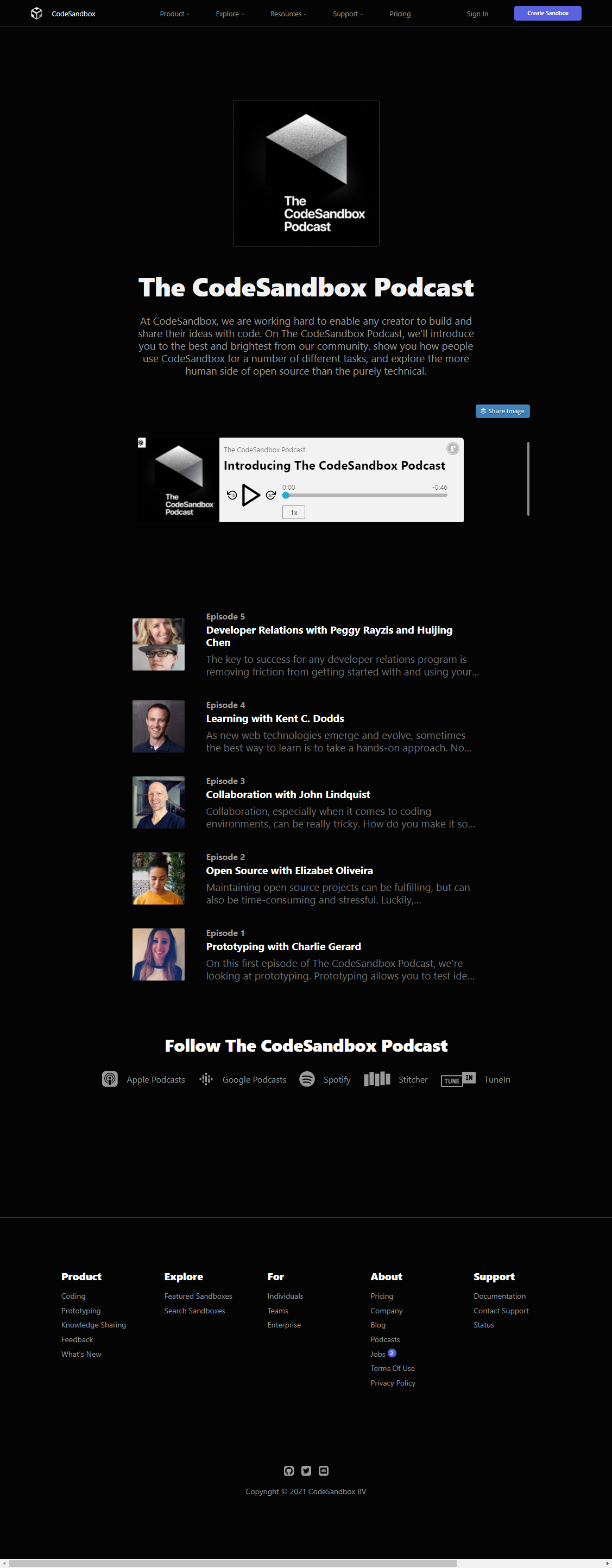
At CodeSandbox, we are working hard to enable any creator to build and share their ideas with code. On The CodeSandbox Podcast, we'll introduce you to the best and brightest from our community, show you how people use CodeSandbox for a number of different tasks, and explore the more human side of open source than the purely technical.
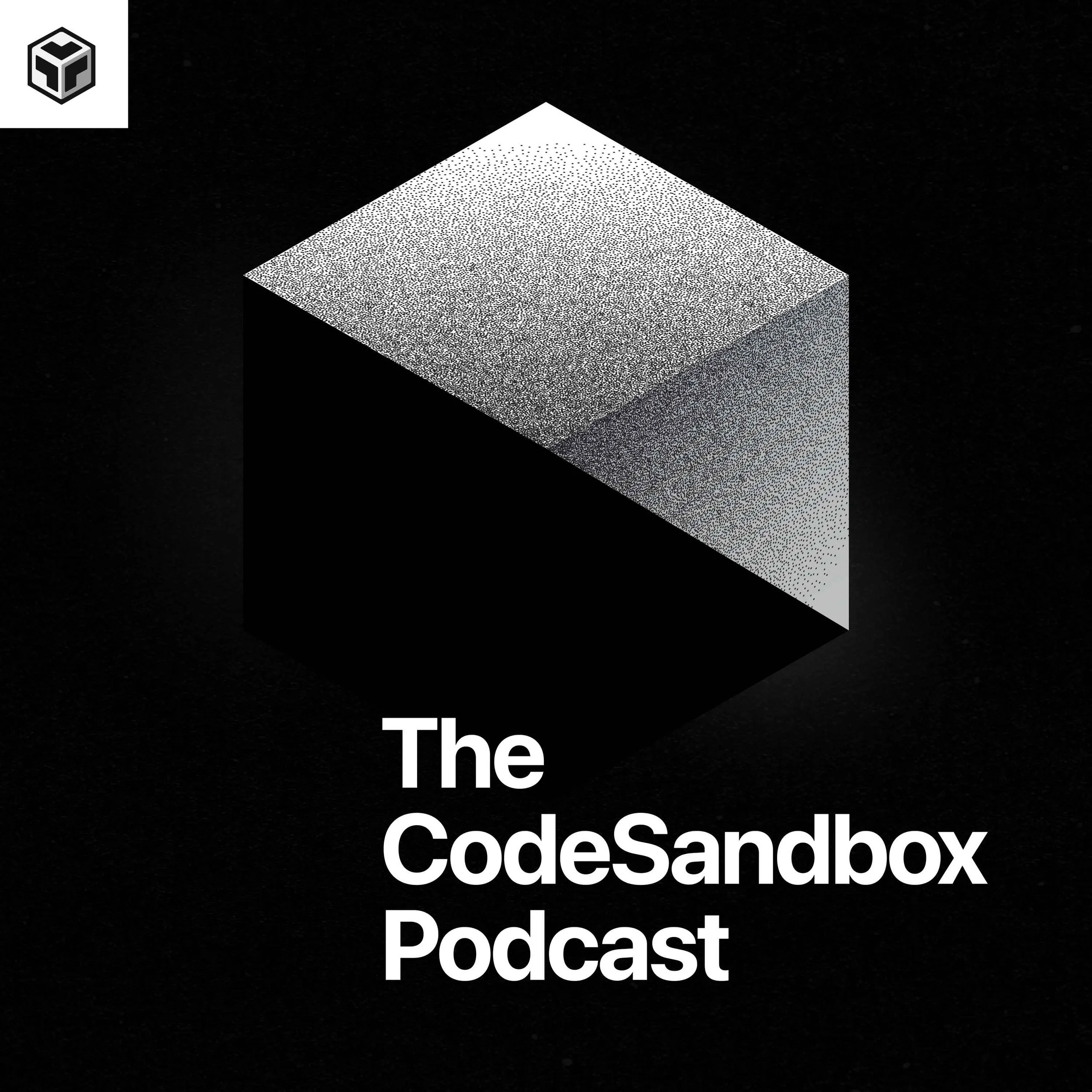
Unlike Version One, there was not a clear design direction for the cover art because the company didn’t have much to draw inspiration from in terms of branding aside from their logo.
Here are some of the rejected design ideas I presented.
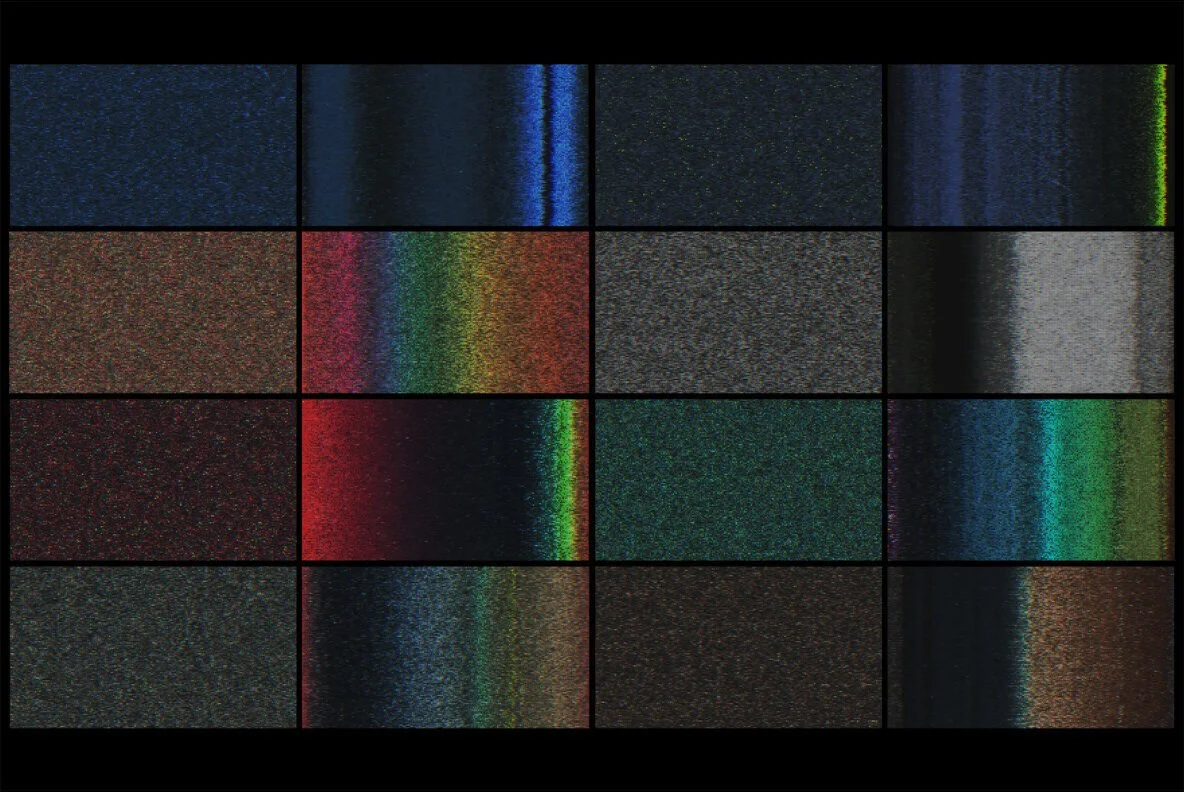
I wanted to play with the concept of noise and different color branding on gradients. This was too minimal.
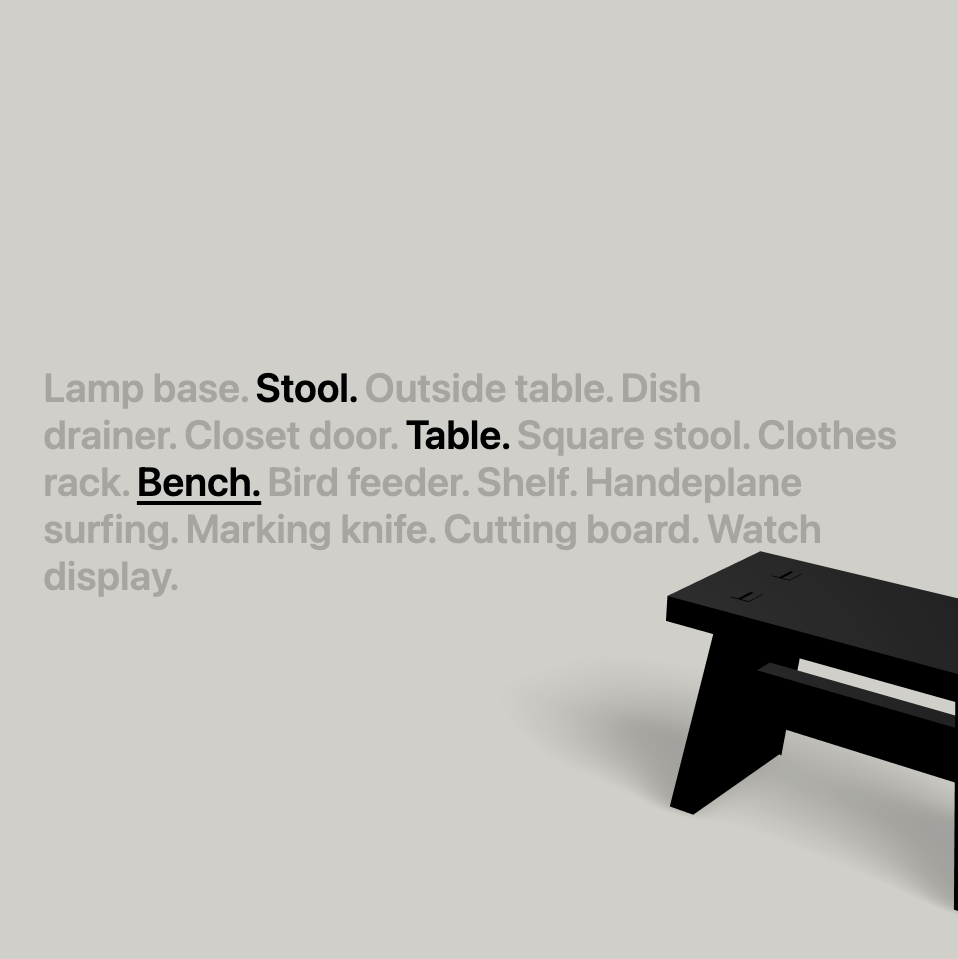
I also explored doing a minimal cover design like this, but there wasn’t enough show information to pull this off effectively.
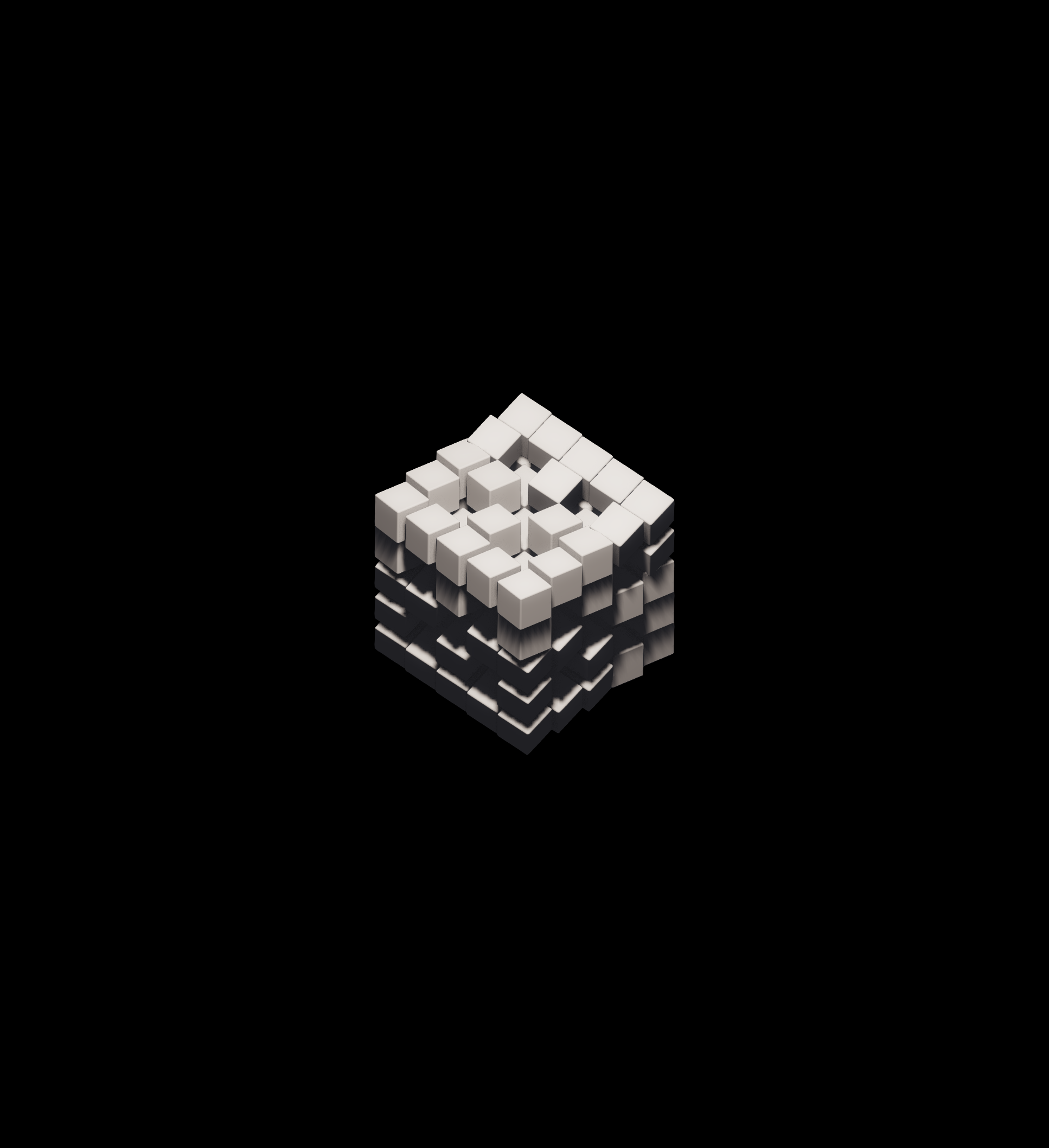
One of our engineers created a visualization that cycled through different random configurations of cubes within a hexagon.
Here is a video showing how this visualization works. I ended up not using it and going for something simpler.
This was the final cover design, which ended up using some of the noise patterns I thought of earlier, along with playing on the minimal text cover design.
I decided to let our production partner, Resonate Recordings, provide us with some choices for music, and our host for the show (Sara Vieira) chose this upbeat track titled “CSB_Music Track #7.”
Production for this podcast began alongside Version One, and I sought out guests to interview. I produced six episodes for this season, with each episode mapping to one of CodeSandbox’s use cases for the platform (prototyping, collaboration, etc.).
Here is the trailer I produced for The CodeSandbox Podcast.
Here is a snippet from episode 4 of The CodeSandbox Podcast with guest Kent C. Dodds.
Conclusion
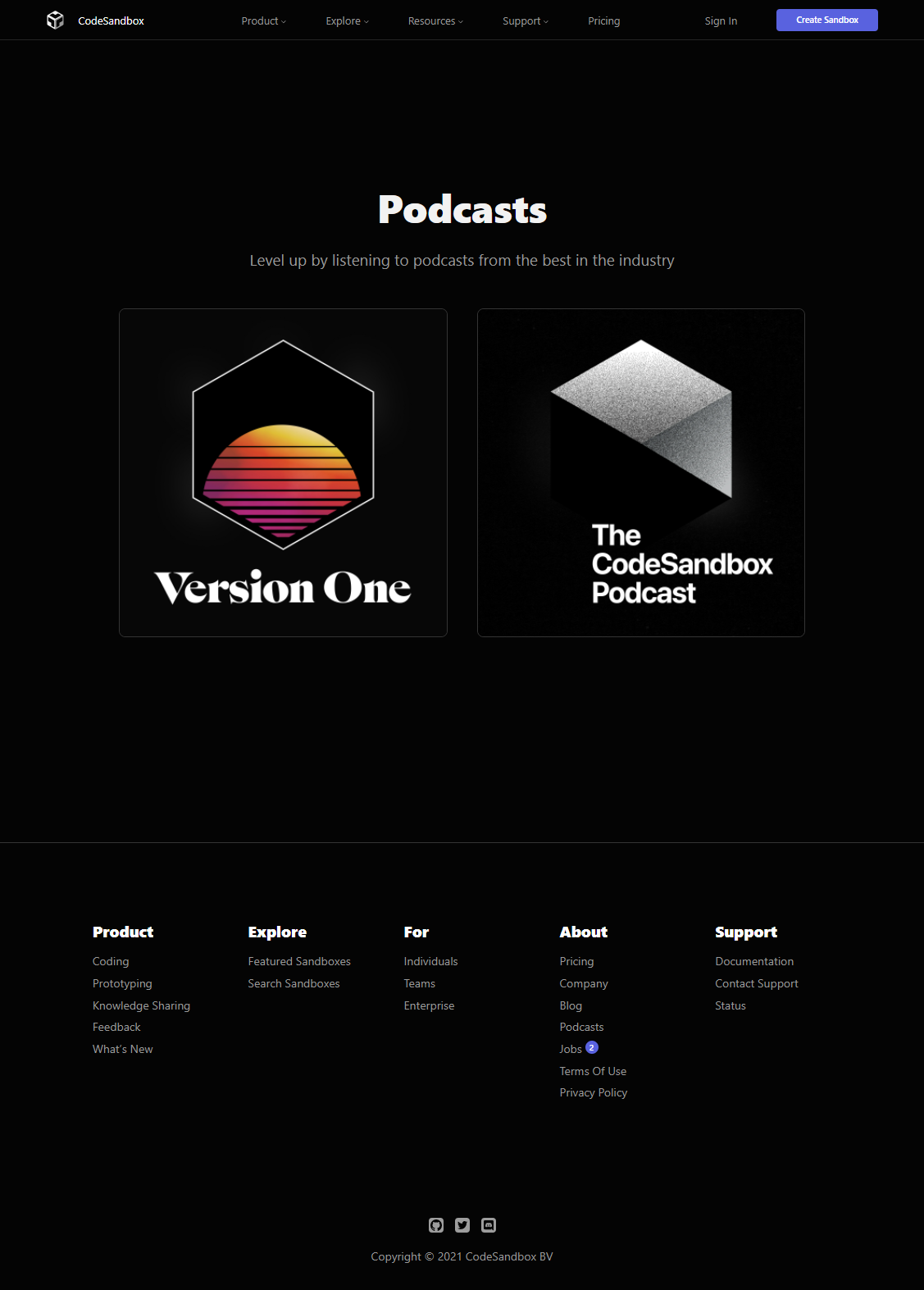
Both podcasts are available on Apple Podcasts, Spotify, and the CodeSandbox website.